How to Increase Brand Awareness Through Digital Marketing (2026 Ultimate Guide)
Why Brand Awareness Is the New Currency of Success
In today’s competitive digital world, attention is everything.
You could have an amazing product or service — but if no one knows about it, it won’t matter. That’s why learning how to increase brand awareness through digital marketing is essential for every entrepreneur.
Brand awareness isn’t just about visibility; it’s about connection and trust. Whether you’re running a small business or a growing startup, digital marketing gives you powerful tools to reach people who care about what you offer.
Let’s build a brand people remember — start with a free consultation.
How Digital Marketing Builds Brand Awareness
Before diving into the specific strategies, let’s first clarify the core mechanics: How does digital marketing increase brand awareness so effectively?
Unlike traditional marketing, which broadcasts generic messages to a passive mass audience, digital marketing is a dynamic system for targeted engagement. It allows you to precisely identify, connect with, and nurture relationships with your ideal customers.
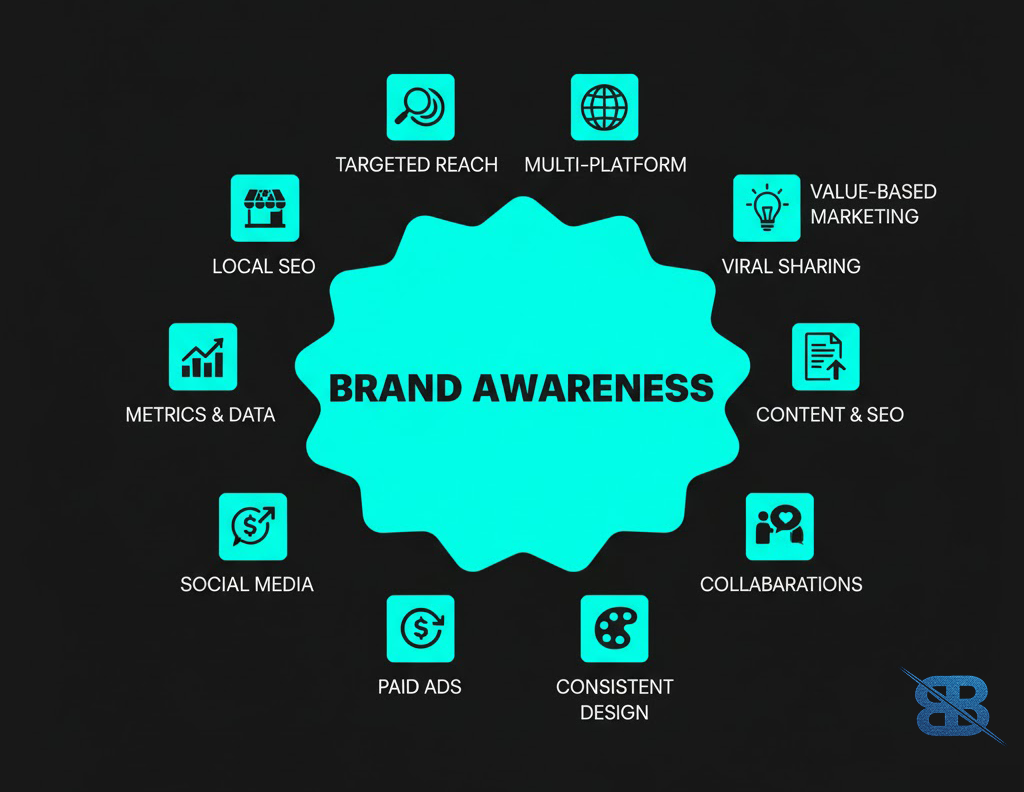
Here’s a breakdown of how it works:
Targeted Reach: Sophisticated ads and social media algorithms analyze user data to deliver your content directly to individuals most likely to be interested, maximizing impact and minimizing wasted spend.
Multi-Platform Presence: A consistent and active presence across key platforms like Google, Instagram, YouTube, and LinkedIn ensures your brand remains visible throughout the customer’s online journey, reinforcing familiarity.
Value-Based Marketing: By sharing helpful, educational, or inspiring content, you build loyalty and trust long before a purchase is ever considered. This positions your brand as a credible authority.
Viral Sharing Potential: A single, creative, or emotionally resonant post can be shared organically by thousands, exponentially expanding your reach and lending powerful social proof.
In essence, digital marketing transforms abstract awareness into a measurable, repeatable, and scalable growth engine.
Ready to make your brand unforgettable? Discover all 12 steps in our comprehensive branding guide
Core Strategies for Building Brand Awareness
Building a recognizable brand doesn’t happen by accident; it’s the result of a deliberate and interconnected strategy. The most successful brands don’t just use one tactic—they weave together a mix of approaches that reinforce each other, creating a powerful and omnipresent identity. The key takeaway is that you don’t need to do everything at once. Instead, focus on doing the right things consistently, building a foundation of trust and visibility that compounds over time.
Strategy 1: Content and SEO — Become the Trusted Industry Expert
Think of your content as your hardest-working employee, attracting, educating, and converting prospects 24/7. By providing genuine value, you stop selling and start helping, which naturally positions your brand as a credible authority. This is the cornerstone of sustainable awareness, answering the fundamental question of how to increase brand awareness through digital marketing with a long-term asset.
Action Steps:
Answer Key Questions: Write comprehensive blog posts and guides that directly answer the most common questions your target audience is searching for. A perfect example is creating a dedicated article on how to increase brand recognition, which builds directly on broader awareness efforts.
Master On-Page SEO: Each piece of content must be optimized. This includes strategic keyword placement in titles and headers, compelling meta descriptions to improve click-through rates, and a strong internal linking structure to keep users engaged and signal topic authority to search engines.
Enhance with Visuals: Boost engagement and shareability by embedding relevant infographics, short videos, and custom charts. This breaks up text and makes complex information easily digestible.
Build a Content Pillar: Create a cornerstone, “ultimate guide” (like this one) on a core topic. Then, create smaller, related blog posts (cluster content) that all link back to this main pillar, creating a powerful SEO hub.
Strategy 2: Social Media and Community — Build Genuine Human Connections
Social media is where your brand’s personality comes to life. It’s the digital equivalent of a local shop owner who knows your name—it transforms a faceless business into a relatable entity that people want to engage with and recommend.
Action Steps:
Strategic Platform Focus: Instead of a scattered presence, dominate 1–2 platforms where your ideal customers genuinely spend their time. A B2B company might focus on LinkedIn, while a lifestyle branding for startups might thrive on Instagram or TikTok.
Consistent, Value-Driven Posting: Develop a content calendar that mixes education, entertainment, and inspiration. Leverage the high engagement of short-form videos, interactive stories, and informative carousel posts.
Foster Two-Way Dialogue: Actively reply to comments, ask questions in your captions, and host live Q&A sessions. Share behind-the-scenes moments to build transparency and trust.
Amplify with UGC: Launch campaigns with a branded hashtag to encourage your customers to share their experiences. Featuring this content on your profile provides authentic social proof that is far more persuasive than any corporate message.
Strategy 3: Collaborations and Influencer Partnerships — Accelerate Growth Through Trust
Collaborating allows you to tap into established trust and credibility, effectively borrowing the audience of a respected creator or complementary brand. This is one of the fastest ways to gain exposure to a highly targeted and pre-qualified audience.
Action Steps:
Leverage Micro-Influencers: For branding for small business, partnering with influencers in the 1K–100K follower range often yields higher engagement and more authentic advocacy than larger, more expensive celebrities.
Co-Create Value: Co-host webinars, run joint giveaways, or develop bundled product offers with non-competing brands that share your target demographic. This provides mutual value and cross-pollinates audiences.
Guest on Authority Platforms: Write guest posts for established industry blogs or secure interviews on relevant podcasts. This builds high-quality backlinks for SEO and positions you as an expert to a new, attentive audience.
Strategy 4: Paid Advertising and Retargeting — Supercharge Your Reach
While organic strategies build a solid foundation, paid advertising acts as a powerful accelerator. It ensures your brand gets in front of thousands of potential customers instantly, filling the top of your funnel and creating vital initial touchpoints.
Action Steps:
Launch Awareness Campaigns: Use platform objectives like “Brand Awareness” or “Reach” on Meta and Google Ads. The goal here is not direct sales, but simply to get your name and logo seen by your target demographic.
Capitalize on YouTube: Utilize YouTube Pre-Roll ads to tell a compelling brand story in 15-30 seconds, capturing audience attention when they are already engaged with video content.
Implement Strategic Retargeting: Set up pixel-based retargeting campaigns to serve gentle reminder ads to users who have visited your website but didn’t convert. This repeated exposure is critical for moving users from awareness to familiarity and, eventually, to purchase.
From Awareness to Recognition: Making Your Brand Unforgettable
While brand awareness means your audience knows your name, brand recognition means they remember you instantly—your logo, your voice, your essence. This is the critical leap from being just another option to becoming the preferred choice. It’s about creating a mental shortcut that makes your brand the automatic answer to your customer’s need. Achieving this requires a disciplined and multi-sensory approach to how you present yourself to the world.
To build this level of instant recall, you must focus on ruthless consistency and emotional connection. This goes beyond your logo; it’s about creating a cohesive and predictable experience that builds comfort and trust. When a customer sees a social media post, an ad, or an email and immediately knows it’s from you without even seeing your name, you have achieved powerful brand recognition. This is the culmination of all your awareness efforts, transforming passive knowledge into active preference.
Here’s how to systematically build that recognition:
Consistent Visual Identity: Apply your logo, color palette, and fonts in the same way across your website, social media profiles, packaging, and advertisements. This visual repetition creates a strong, unified brand memory.
Define a Clear Brand Voice & Personality: Decide if your brand is witty, authoritative, or compassionate, and maintain that tone in everything from blog posts to customer service replies. A consistent voice makes your brand feel like a familiar person.
Leverage Emotional Storytelling: Share authentic customer success stories and champion brand values that your audience relates to. People remember how you make them feel far longer than what you say.
Develop Signature Sensory Cues: Consider creating a short, unique audio logo (a “sonic mnemonic”) for your videos and ads, or adopt a distinctive visual style, like a specific filter or animation technique. These sensory cues become powerfully associated with your brand alone.
Tailored Approaches for Different Businesses
A one-size-fits-all strategy doesn’t work in branding. The core principles of consistency and value remain, but the execution must be tailored to your business’s specific context, resources, and goals. A local service business will build awareness differently than a tech startup aiming for global disruption. Understanding your unique position in the market allows you to allocate your resources effectively and connect with your audience in the most authentic and impactful way possible.
For Small Businesses: Becoming the Beloved Local Favorite
For a small business, the goal is to dominate your local community, becoming the first and most trusted name in your service area. Your strategy should blend online visibility with genuine offline engagement. This hyper-local focus is your superpower, allowing you to build deep relationships that large corporations cannot. Success is measured by your reputation as a local pillar and the word-of-mouth recommendations that follow.
Key Tactics:
Master Your Google Business Profile: This is your digital storefront. Ensure it’s perfectly optimized with high-quality photos, regular posts about offers or events, and actively encourage happy customers to leave positive reviews. This directly improves your visibility in local “near me” searches.
Dominate Local SEO: Incorporate your city and neighborhood into your website’s keyword strategy, page titles, and content. Create location-specific landing pages and ensure your name, address, and phone number (NAP) are consistent across all online directories.
Embed Yourself in the Community: Actively participate in local events, sponsor a little league team, or partner with other nearby businesses for cross-promotions. Engage in local Facebook groups not to advertise, but to offer genuine advice and become a known, helpful face.
For Startups: Building Momentum and Trust at Speed
For a startup, the goal is to generate buzz, attract early adopters, and establish credibility quickly, often with limited resources. Your branding should project innovation, transparency, and a compelling vision for the future. The focus is on building a community of evangelists who are invested in your journey and success, turning them into a powerful marketing force.
Key Tactics:
Build in Public: Share your startup’s journey, including challenges and milestones, on platforms like LinkedIn, X (Twitter), or a dedicated blog. This radical transparency builds immense trust and makes your audience feel like co-creators.
Leverage Launch Platforms: Get featured on sites like Product Hunt, Betalist, or relevant startup directories to tap into communities of early adopters and tech enthusiasts who are actively seeking the “next big thing.”
Create Viral-Loop Incentives: Implement referral programs that reward existing users for bringing new ones. Offer limited-time free trials or demo access to lower the barrier to entry and encourage word-of-mouth marketing from a satisfied initial user base.
How to Measure Brand Awareness: Tracking Your Invisible Growth
Brand awareness can feel intangible, but with the right metrics, you can transform it into a data-driven strategy. Tracking your progress is essential to understand what’s working, justify marketing spend, and steer your efforts in the right direction. By monitoring a key set of indicators, you can see the direct correlation between your activities and your brand’s growing footprint in the market, moving from guesswork to informed decision-making.
Essential Metrics to Watch:
Direct Website Traffic: A steady increase in users typing your URL directly into their browser is a strong signal that your brand is becoming top-of-mind.
Branded Search Volume: Use Google Search Console to track how many more people are searching for your brand name specifically. This is a pure indicator of growing awareness.
Social Mentions & Share of Voice: Monitor how often your brand is mentioned on social media and in reviews, and compare it to competitors. This shows engagement and your relative market presence.
Backlink Authority: An increase in quality websites linking to your content signals that you are being recognized as an industry authority, boosting both SEO and credibility.
Social Media Reach & Engagement Rate: Track not just follower count, but how many people see your posts (reach) and interact with them (likes, comments, shares), indicating content resonance.
Pro Tip: Use free tools like Google Analytics and Google Search Console for website and search data. For more advanced competitive insights, platforms like Ahrefs or Semrush can track your share of voice and keyword rankings over time.
Conclusion: From Invisible to Unforgettable
Mastering how to increase brand awareness through digital marketing is one of the most strategic long-term investments you can make in your business’s future. It’s the process of planting seeds and nurturing them patiently, building a foundation of trust and visibility that competitors cannot easily dismantle. This journey requires a commitment to creating remarkable value, engaging with genuine intent, and presenting a consistent brand at every single touchpoint.
Remember, the goal is not just to be seen—it’s to be remembered and preferred. By implementing the tailored strategies for content, social media, partnerships, and paid amplification, you systematically build that presence. Over time, with persistence and focus, your audience won’t just notice you; they will instinctively know you, trust you, and choose you. Start applying one strategy today, and begin your transformation from an invisible business into an unforgettable brand.
Frequently asked Questions (FAQs)
Brand awareness is the degree to which your target audience recognizes and remembers your brand online. It’s not just knowing your name — it’s being able to identify your products, logo, or message among competitors. In digital marketing, brand awareness is built through consistent exposure across search engines, social media, ads, and content marketing, which helps create trust and familiarity over time.
Results usually take 3–6 months, but it depends on your strategy, content quality, and consistency. If you publish optimized content regularly, engage your audience on social media, and run targeted campaigns, you may start seeing traffic growth, social mentions, and recognition metrics within a few months. Full impact, like increased loyalty and conversions, generally takes longer and grows cumulatively.
B2B brands: LinkedIn and Google Ads are highly effective because they target professionals and businesses specifically.
B2C brands: Instagram, TikTok, and YouTube dominate in 2024 due to their high engagement, visual storytelling, and viral potential.
Choosing the right platform ensures your content reaches people who are most likely to interact with and remember your brand.
Digital marketing increases awareness by repeatedly exposing your brand to the right audience through multiple channels. This includes:
Content marketing: blogs, videos, and guides that educate or entertain.
SEO: optimizing your website so your brand shows up when people search relevant topics.
Social media: sharing content that engages and connects with your audience.
Advertising: targeted ads that put your brand in front of potential customers multiple times.
This repeated, value-driven exposure builds familiarity, trust, and recognition over time.
Small businesses can grow their visibility effectively with low-cost strategies:
Local SEO: optimizing Google Business Profile and using location-based keywords.
Consistent social posting: creating valuable, shareable content even on free platforms.
Community engagement: participating in local events, online groups, or partnerships.
These approaches are affordable but highly effective, helping small businesses reach their target audience, build trust, and grow brand recognition without heavy advertising spend.